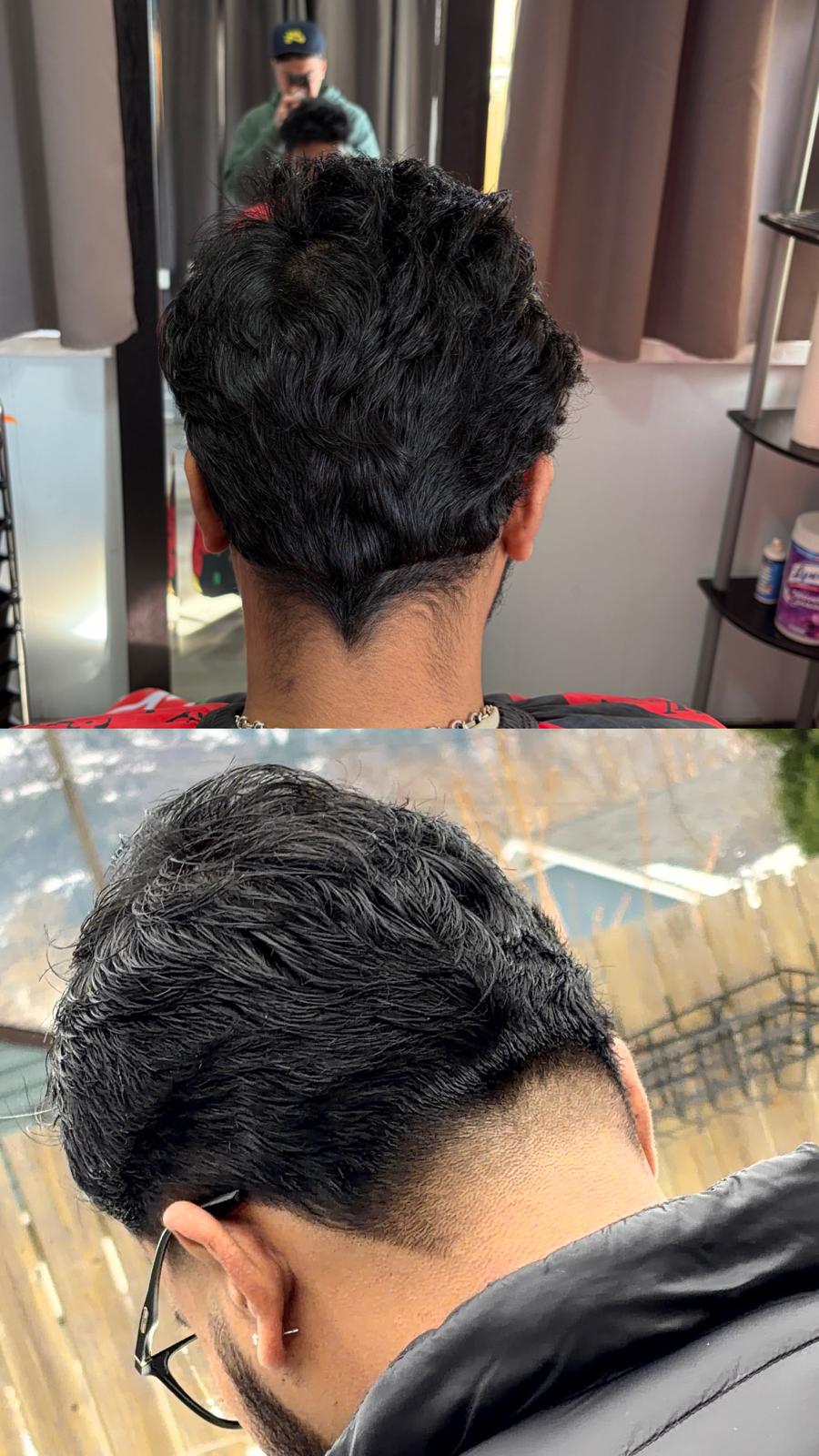
There's a specific frustration that comes from sitting in the barber chair, saying "just a fade," and walking out with something that isn't quite what you had in mind. You know the look you wanted. You just couldn't find the words. This guide fixes that.
Whether you're a first-timer or someone who's been getting fades for years and still feels uncertain about the terminology, by the end of this article you'll know exactly what to say to your barber — and why it matters.
Why Communication Matters
"Fade" is not one haircut — it's a category that contains dozens of variations. Two people can both ask for a "fade" and walk out looking completely different. The difference comes down to three things: the height (where the fade starts), the depth (how short it goes at the bottom), and the top (what you do with the hair above the fade).
A great barber like Pablo at Salomon Fades Studio will ask questions and guide you — but the more specific you can be upfront, the better your result will be. You're collaborating, not just giving an order.
Clipper Guard Numbers Explained
Clipper guards determine the length of hair left after cutting. Each number represents an eighth of an inch. Understanding them gives you a precise common language with your barber.
A typical skin fade might use guards 0 → 0.5 → 1 → 2 → 3 as it blends upward. A taper fade might use 1 → 2 → 3 → 4. Your barber selects the guards — you just need to communicate the overall look you want.
The 5-Step Formula for Asking
Skin Fade or Taper Fade?
Decide whether you want the fade to go all the way to the skin (skin/bald fade) or leave a bit of hair at the base (taper fade). This is the most important decision.
Low, Mid, or High?
Tell your barber where you want the fade to start. Low = just above the ear. Mid = temple level. High = near the top of the sides. Higher means more contrast.
Describe the Top
Tell your barber how much length you want to keep on top and roughly what style — textured, slicked back, natural, crop, etc. This shapes the whole haircut.
Mention Any Details
Do you want a hard part? A line-up or shape-up on the hairline? A drop fade behind the ear? The more specific, the better.
Show a Photo
Even after describing everything verbally, pull up a reference image on your phone. It eliminates all ambiguity and gives your barber a visual target.
Exact Phrases to Use
Here are some real-world examples of how to ask for common fade styles:
- "I'd like a low skin fade with a textured crop on top." — Clean, modern, low-maintenance top.
- "Can I get a mid taper fade, keep about 3 inches on top, and I want a natural finish." — Classic versatile look, works in professional settings.
- "I want a high fade to the skin, with a curly top — maybe 2 to 3 inches of length." — Bold, high-contrast style for curly hair.
- "Give me a drop fade on the sides, taper to a 1, and a textured quiff on top." — Stylish with character and movement.
- "Just a clean line-up and a mid fade — not too short on top." — Simple, professional, easy to maintain.
Notice the pattern: fade type + height + top description. That three-part formula covers 90% of what your barber needs to know.
How to Use a Reference Photo
A reference photo isn't a sign that you don't trust your barber — it's a sign that you're a good client. Every barber, including Pablo, appreciates clients who bring photos because it eliminates guesswork and speeds up the consultation.
How to Find a Good Reference Photo
- Search Instagram or Pinterest for "low skin fade," "mid taper fade," or whatever style you have in mind
- Save 2–3 photos that capture different aspects — one for the side profile, one for the back, one for the top
- Try to find photos on someone with similar hair texture to yours
- Save them to your camera roll so they're easy to access in the chair
Pro Tip
Bring a photo of what you don't want as well. It sounds counterintuitive, but telling your barber "I want something like this, but not as high as this" is extremely effective communication.
What to Say When Showing the Photo
Don't just silently hand your phone over. Say something like: "I like the fade on this one, but I want to keep a bit more length on top" or "This is roughly what I'm going for, but my hair is curlier so it might look slightly different."
Common Mistakes to Avoid
- Being too vague: "Short on the sides" is not enough information. Every fade involves short sides — the question is how short and where the blend starts.
- Only describing what you don't want: "Not too short" and "not too long" without positive direction leaves your barber guessing. Tell them what you want, not just what you don't.
- Forgetting to mention the top: The fade doesn't exist in isolation — what you do on top dramatically changes the overall look. Always describe both.
- Not speaking up mid-cut: If the barber is going shorter than you expected, say something. A good barber won't be offended — they'd rather fix it than have you leave unhappy.
- Skipping the consultation: Even 60 seconds of conversation before the clippers start can save you from a disappointing result.
FAQ
What if I don't know exactly what I want?
Tell your barber that. Say "I want a clean fade but I'm open to suggestions based on my face shape and hair type." A skilled barber like Pablo will guide you to a great result.
Is it rude to show a photo of someone else's haircut?
Not at all — it's encouraged. Reference photos are one of the most helpful tools in a barber consultation. Most barbers wish every client brought one.
What's the difference between a line-up and a fade?
A line-up (or shape-up) defines and sharpens the natural hairline edges — the forehead, temples, and sideburns. A fade is the blend from short to longer on the sides. They're often done together.
Can I ask for changes once the cut has started?
Yes, always. If something is going in a direction you're not happy with, speak up immediately. Barbers can almost always adjust mid-cut.